
Sumter’s Canty Leads From Every Seat
The 3 Ps of His Public Life: Presence, Perception, Persuasion
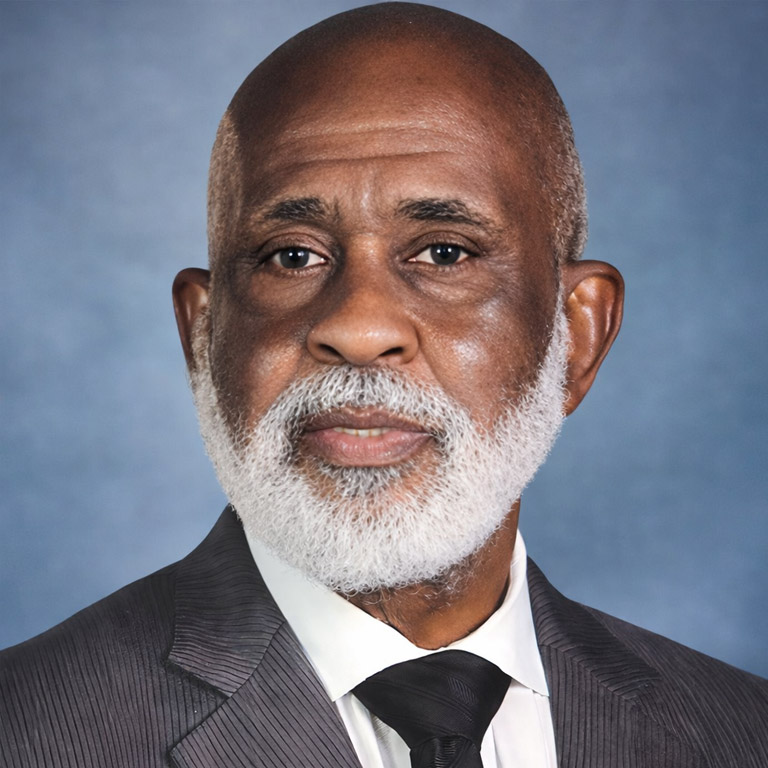
The Bible speaks of the typical human lifespan as around 70 years and 80, or fourscore, for the exceptionally strong. On Oct. 9, 1945, in Sumter, S.C., one of the most formidable and prolific community organizers to emerge from the Pee Dee region was born to the Rev. Benjamin F. Canty Sr. and Rena (Smith) Canty: Sumter School District Board of Trustees member the Rev. Dr. Ralph Canty.
A combination of the Jim Crow era, the hood and, most profoundly, the church shaped his leadership acumen. Because he defines leadership through the three Ps — presence, perception and persuasion — rather than position, Canty said life behind the iron curtain of apartheid offered countless opportunities for development as a leader, spokesperson, advocate and crusader.
At age 10, he experienced the first of many “come to Jesus” moments shaping the leader he remains today.
On Sunday, Feb. 26, 1956, Canty’s pastor, the Rev. H. P. Sharper, the Rev. J. A. Rice and Clarence Mitchell, longtime lobbyist for the NAACP, challenged the “whites only” ticket window and waiting area at the Atlantic Coast Line Railroad Station in Florence, S.C.
The station featured separate facilities for white and African American passengers, a common segregation practice. The “colored” waiting room often occupied less prominent space. Mitchell and the others were arrested after using the “whites only” door. The incident drew national attention and contributed to the abolition of segregated entrances across the South.
“As a 10-year-old, I had no idea how far-reaching the implications of their actions were, but I knew it took courage to confront the system,” Canty said. He learned of the incident the following Sunday when a church deacon briefed the congregation. “It gave me a new perspective on the ‘whites only’ barriers I had accepted as usual and customary. As I trembled in awe, my consciousness of race, self-worth and purpose changed radically.”
Canty said he left church carrying renewed resolve to confront and dismantle hate, evil, oppression and injustice wherever they appeared.
From ages 14 to 18, Canty served as president of the Baptist Training Union at his home church and later was elected first treasurer of the youth department of the Progressive National Baptist Convention Inc. during its founding.
He participated in the Boy Scouts of America and Explorers and served as president of the Teenage Birthday Club, the youth council and the Morris College NAACP chapter. He also served as president of his high school senior class, college sophomore class and the student government association.
Much of his early work focused on dismantling visible walls of segregation across his community. He later played a central role in designing the blueprint for the Sumter Movement of the NAACP, which helped remove some of the remaining barriers.
Training during those years proved both experiential and intellectual, Canty said.
“When cross-cultural exchanges became more prevalent,” he said, “I was comfortable sitting at the table as an equal.”
While perspectives often differed, Canty insisted collaboration remained possible through shared vision, values and purpose. Wisdom offers pathways around distraction and obstruction where mutuality does not exist, Canty said. While racial divisiveness remains significant and must never be dismissed, divisiveness of any kind by any group also demands attention.
“Civility is a credential of the civilized but an enigma for the uncouth,” Canty said.
Canty describes leadership as an art that galvanizes others, inspires pursuit of visions larger than life and empowers people to maximize collective ability beyond imagination.
“Leaders must remember one essential truth: if no one follows, the role becomes insignificant and inconsequential,” he said.
Across decades, Canty often served in multiple leadership roles simultaneously, a pattern that characterized much of his adult life.
During the 1970s, he served as pastor at Savannah Grove Baptist Church while also operating Job’s Mortuary Inc. and Hazel’s Country Diner. At the same time, he was director of alumni affairs and public relations at Morris College and hosted a daily gospel radio broadcast.
In the 1980s, his service expanded further. He continued as pastor and proprietor of Job’s Mortuary while serving as president of the Progressive National Baptist Convention Inc. and the S.C. Baptist Congress of Christian Education. He also remained active as a radio host. At age 35, Canty said he became the youngest person ever elected to lead a major religious denomination in America.
During the 1990s, Canty again balanced multiple roles, serving as pastor, proprietor, member of the South Carolina General Assembly and radio host.
In later years, his leadership continued as pastor at Savannah Grove and West End Community Church, proprietor of Job’s Mortuary and Smith-Canty Funeral Service, interim general secretary of the Progressive National Baptist Convention, moderator of the Pee Dee Baptist Association and president of Iris Communications Inc. He also served intermittently as a school board member across several decades.
“Successful leadership across multiple roles,” he said, “begins with understanding personal limitations, valuing others’ abilities and surrounding oneself with capable contributors.”
Critical to the emergence of his enduring legacy was his call to serve as pastor of Savannah Grove Baptist Church at age 23. Founded in 1866, the church was organized under a brush harbor on a one-acre parcel in Florence County’s Effingham community. More than five decades later, the once-agrarian congregation has grown cosmopolitan in mission and ministry.
When he arrived, the campus covered five acres. Today, it spans 51 acres, including the Heritage Sanctuary (1939) and a new sanctuary, parsonage, educational complex, senior citizens facility, conference center and media center. The annual budget has grown from under $20,000 to more than $1 million.
In partnership with Florence County, the church supports a 21-acre community park featuring ballfields, courts, a walking track and picnic space. It also hosts a National Defense Fund Freedom School and supports SMART School, an in-house initiative providing student remediation and tutoring.
Despite these accomplishments, Canty said celebration matters less to him than accountability.
“(There are) moments which call us from the extreme to center, moments where character or color is not nearly as significant as community,” Canty said.
Canty is married to the former Toye J. Richburg and is the father of six children, seven grandchildren and six great-grandchildren.